Orchid: How did it get it’s name?

Etymology:   The origin of the word Orchid.

The name comes from the Ancient Greek ὄρχις (órkhis), literally meaning “testicle“, because of the shape of the root. Carl Linnaeus classified the family as Orchidaceae.

Orchid was introduced in 1845 by John Lindley in School Botany, due to an incorrect attempt to extract the Latin stem (orchis) from Orchidaceae.

The Greek myth of Orchis explains the origin of the plants. Orchis, the son of a nymph and a satyr, came upon a festival of Dionysus (Bacchus) in the forest. He drank too much, and attempted to rape a priestess of Dionysus. For his insult, he was torn apart by the Bacchanalians. His father prayed for him to be restored, but the gods instead changed him into a flower.

These flowers were previously called OrchisSatyrion (Satyrion feminina), or “ballockwort”.

Orchidaceae are cosmopolitan, occurring in almost every habitat apart from glaciers.

The world’s richest concentration of orchid varieties is found in the tropics, mostly AsiaSouth America and Central America, but they are also found above the Arctic Circle, in southern Patagonia, and two species of Nematoceras on Macquarie Island at 54° south.


Source: Wikipedia
By pamaitchison Posted in Meetings

Orchid Fair in San Diego

San Diego International Orchid Fair

October 5-6, 2013

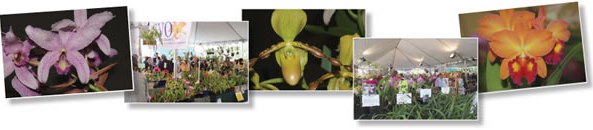
Plan to visit the San Diego Botanical Garden the weekend of Saturday, October 5th  through Sunday, October 6th to see the splendidly colorful San Diego International Orchid Fair.  Countless varieties of orchids grace the grounds, some in exhibits and some for sale.

Learn from the experts how to care for your newly purchased orchids at “Orchids 101,”our ongoing lectures on culture and care.

  • Where: The San Diego Botanic Garden

    The San Diego Botanic Garden, formerly Quail Botanical Gardens, is a botanical garden in Encinitas, California, USA.

  • Address: 230 Quail Gardens Dr, Encinitas, CA 92024

  • Phone: (760) 436-3036

  • Hours:  9:00am to 5:00pm

  • Cost:  The Orchid Show inside the garden is Free with paid daily admission to the Botanical Garden. (see details below)

    NOTE: You can also get in FREE if you have a membership at the San Diego Botanical Garden or any of the other 200 Gardens in the Reciprocal Membership program including the LA Arboretum, The American Horticultural Society or the American Orchid Society (must show Current Membership card).

    Adults $14
    Seniors, students, active military $10
    Children ages 3-12 $8
    Members; children ages 2 & under FREE
    Parking $2*    

    *Members park free.

Banner Photo: Ben Mach
Lycaste About first spring ‘Peter Sobel my delight’ FCC/AOS
The Grower is Helen Pfister

Montage Photos: Loren Batchman, left to right, L Anceps Tamiko, Sales Area,
Paph Veronique Bert, Sales Area, Pot Little Toshie ‘H & R’

By pamaitchison Posted in Meetings

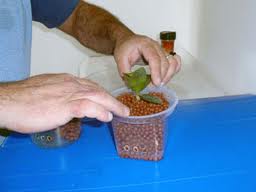
September 4, 2013 Hydro Culture for Orchids

Our speaker for September is our own SFVOS member, Pamela Aitchison. Pam has been serving on our Board of Directors for the past year and is a regular contributor to our monthly newsletter. Pam is also the webmaster for our SFVOS website.

Pam is a Certified University of California Master Gardener, and has been teaching organic gardening for many years. She is on the teaching team that provides training to the new Master Gardener Candidates every year, and is a regular guest lecturer at California State University at Northridge (CSUN).

Pam has been growing orchids for more than 30 years, and her collection includes Cattleyas, Dendrobiums, Epidendrums, Miltonias & Miltoniopsis, Oncidiums, Maxillaria, Masdevillias, and Phalaenopsis, Cymbidiums, Vandas, Vanilla Orchids and Zygopetalums.

Pam will be sharing information about growing orchids the Hydro-Culture way, a method that is rapidly gaining popularity all over the world. Throw away what you think you know about hydroponics. This is completely different. The Hydro-Culture method of growing orchids is simple, requires much less work, less frequent watering and is much healthier for your orchids. Hydro Culture has been used for years by professional orchid growers and it certainly deserves consideration by beginners and experienced growers as well. Come join us on September 4th, to see her Power Point presentation and hands-on demonstration of the Hydro Culture method

AOS Monthly Checklist for September and October

Cattleya: Despite the shortening days and lowering angle of the sun, September can still be one of the hottest months. Water and fertilizer need to be in balance with heat and light. The alert grower will notice, however, that his or her plants are beginning to slow down a bit. Growths are maturing, and the sheaths are giving the promise of the next six-months’ bloom.

Check plants for potting needs for the last time this season. Any in dire need should be potted, even some that may be on the cusp, as there is just enough of the growing season left to allow the plants to establish before the days start to get really short and cold.

This is the month for purples derived from Cattleya labiata breeding to flower. If you are short on flowers, look into this group. There is nothing that can quite match this type for beauty and fragrance. They are easy to grow, too.

Plants summered outdoors should begin to be prepared to be brought back into the winter growing area. Clean the plants up and be on the lookout for any pests they may have picked up during the summer. Treat as necessary.

Cycnoches:This little-known and under-appreciated genus, which can have male or female flowers, is at its best in the autumn. Two of the spectacular varieties are Cycnoches loddigesii, with its large brown flowers resembling a prehistoric bird, and Cycnoches chlorochilon, the swan orchid. This last one has large, fragrant green flowers. The biggest problem, culturally, will be red spider mite infestations that require immediate attention. Plants are quite seasonal, requiring heavy watering in the growing season and then a drier dormant winter season.

Cymbidium: Summer can be the most rewarding season for cymbidiums. Growths should be coming strong now. The leaves of the new growths are best when they are broad and fairly stiff. The color should be a light green to nearly yellow. Early flowering varieties should be showing flower spikes, so move the plants into a cooler area with lower light. For mid-season varieties, lower the dosage of nitrogen to assist in spike initiation.

Dendrobium:This is a good season for hybrids of the Dendrobium phalaenopsis and Dendrobium canaliculatum types. Both are capable of putting on tremendous shows of long-lasting flowers. Fertilize with a low-nitrogen formula to promote the best flowers. Dendrobium phalaenopsis can get tall and top heavy, suggesting an attractive and heavy container would be appropriate for this type.

Rhynchostele bictoniensis:Both Rhynchostele bictoniensis and its hybrids bloom in this season. Rhynchostele bictoniensis, formerly known as Lemboglossum, Odontoglossum) is a showy species from Mexico that has three different color forms: sulphureum (green with white lip), album (brown with white lip) and roseum (brown with a pink lip). It is a vigorous grower with tall inflorescences of many flowers, and imparts to its progeny (as seen in Odcdm. Bittersweet and Odm. bicross) ease of culture, warmth tolerance and eye-catching patterns. They make a prime candidate for odontoglossum beginners and advanced alike.

Paphiopedilum: Standard, green-leaved paphiopedilums begin to show their bloom sheaths this month. Late-season heat waves can blast these early sheaths, so be observant about proper cooling and air circulation. As with the rest of your plants that may have been summered outdoors, it is time to prepare for their move inside. Clean each plant and implement pest-control practices. Repotting, if necessary, is appropriate.

Phalaenopsis: The bulk of this season’s growth is being ripened this month, with growers in cooler climates seeing the first emerging inflorescences. Some night heating may be necessary in the cooler areas. Begin to watch watering more carefully, and reduce feeding proportionately with reduced watering needs. An extra dose of phosphorus and potassium, such as a bloom-booster or high-acid-type fertilizer, is beneficial.
Rossioglossum grande: Once known as Odontoglossum grande, this is a spectacular orchid with six to eight flowers up to 8 inches across. Often known as the tiger orchid, it has bright golden yellow flowers heavily marked with chestnut brown barring. The plants are beautiful with a grey-green cast to the foliage, which is borne on succulent pseudobulbs. It prefers hot and wet summers with cooler, even down to 40 F, dry winters. Grow under filtered light. Watch for snails and slugs that eat the flowers, pseudobulbs and leaves.

The AOS thanks Ned Nash and James Rose for this essay.
By pamaitchison Posted in Meetings

Zygopetalum crinitum

Our featured orchid for August is the Zygopetalum crinitum.   It’s common name is “The Hairy Zygopetalum”.

These beautiful orchids are found at elevations of 600 to 1200 meters in the cool and moist mountain ranges of South America.  Most of them are found in Brazil in the mountains near Rio de Janeiro, and Sao Paulo.    They generally bloom from October through December and they produce a tall flower stalk which usually has eight to ten 9 cm flowers on it.    The flowers are fragrant, waxy and very long-lived.  The flowers are generally yellow-green with purple-brown streaks.  The flowers are also prized in cut-flower arrangements.

They have a reputation of being easy to grow for the home orchid enthusiast.  They like to be evenly moist at all times.  Do not let the potting media dry out completely.  They require medium to bright light, and when the light green leaves show some yellowing you can be assured that maximum light is being absorbed.  They require a medium to fine bark with some perlite added for moisture retention.

My Zygopetalum crinitum is in full bloom right now, so it must be confused about what time of year it is.  I got mine at the Santa Barbara Orchid Estate in 2008, and it has been reliably blooming every year since then.   Give this one a try.  You will be very happy you did.

The Flying Duck Orchid!

Here is another unique orchid. It is called the Flying Duck Orchid It’s botanical name is Caleana major.

It’s a small orchid, about 50 cm tall. It grows in eastern and southern Australia.

It’s a truly remarkable flower – it seriously looks just like a male duck in flight!

Stayed turned for more amazing orchids in the near future.

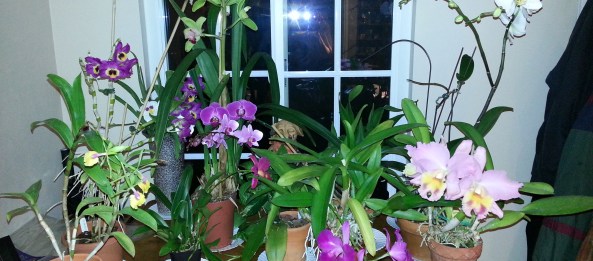
Window Orchid Display Table Example

Everyone loves to display their blooming orchids in their homes.   Putting them all around the house adds a nice decorators touch to each room, but you can also put them all on one table for a more dramatic display.    Your friends and family will love to see what you have blooming, and the display is constantly changing throughout the year, so it never looks the same.

Here is a sample window display you can set up in your home to show off your blooming orchids.  Remember to put it in an East or North facing window.  No direct sunlight as it can burn the tender leaves of some orchids, such as Phalaenopsis.   Also the humidity inside homes is usually quite low, especially in the winter and the hot part of the summer when the air conditioner is running.  You can provide more humidity by using a humidity tray under the orchids.

To set up a homemade humidity tray,  place a shallow pan filled with gravel, decorative pebbles or lava rock on your table and fill with a small amount of water.  Set the orchid pots on top of the rocks, but never let them sit in standing water.  The pots should be above the water level at all times.

Keep your inside orchids clean by hosing off the entire plant in the bathtub or outside about once a month.  Do this in the morning so the plant will have time to dry off completely during the day.  Also never let water accumulate at the growing point on Phalaenopis (the point where the leaves connect at the center).   Water left in the crown can lead to crown rot, so dump out, and blow out any remaining water on the plant before putting back on the table.

Lastly a small fan for air circulation would be very helpful.  Put it on a timer and have it run for a few hours, on and off during the day.   Orchids love moving air.

Best of luck on your home display.